
Marked to Zero
A fraud in Jakarta, and a payroll crisis in Jashore. Why one artery of capital is not an ecosystem.

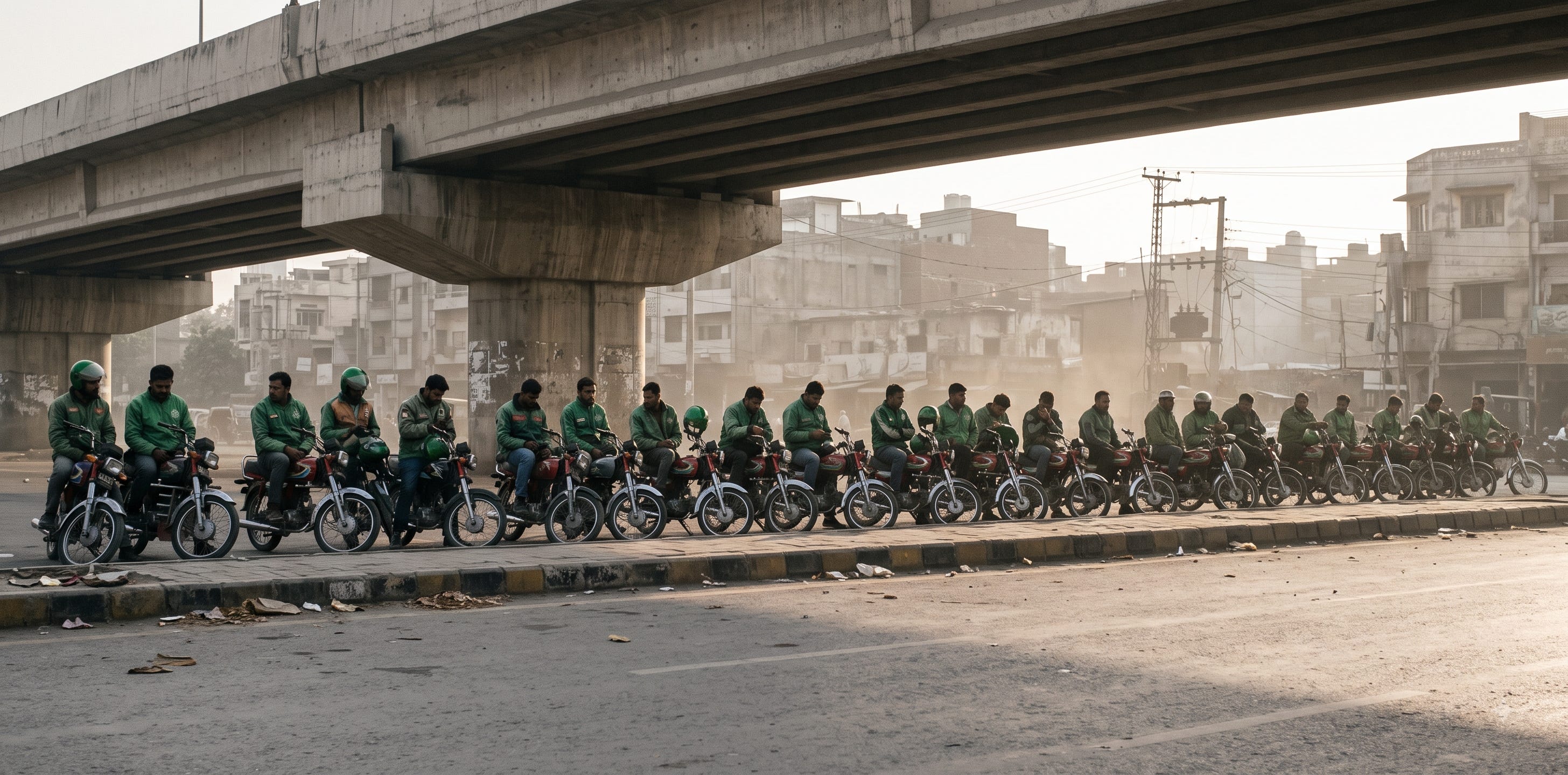
The call came at an hour that told me it wasn’t a catch-up.
A friend of mine runs one of the largest venture funds in Southeast Asia. He has spent fifteen years walking into rooms in Boston and Riyadh and Zurich explaining, patiently, that this region was the next great story. He built a career on that sentence.
He didn’t sound like that anymore.
“Everything,” he said, “is getting marked to zero.”
It’s hyperbole. Funds don’t literally write portfolios down to nothing. But a man whose entire professional identity rests on this region’s promise reached for the most extreme sentence available to him, and it did not feel extreme to say out loud.
I have heard that tone once before. May 2019, watching Uber open at forty-five dollars and close at forty-one sixty, and understanding within about a week that the chain of capital I had built our roadmap on had frozen from the top down.
So I know what this is. What I didn’t understand then, and do now, is why a region this large can be repriced by so few events, and why the bill so rarely lands on the people who caused it.
The Man in the Food Court
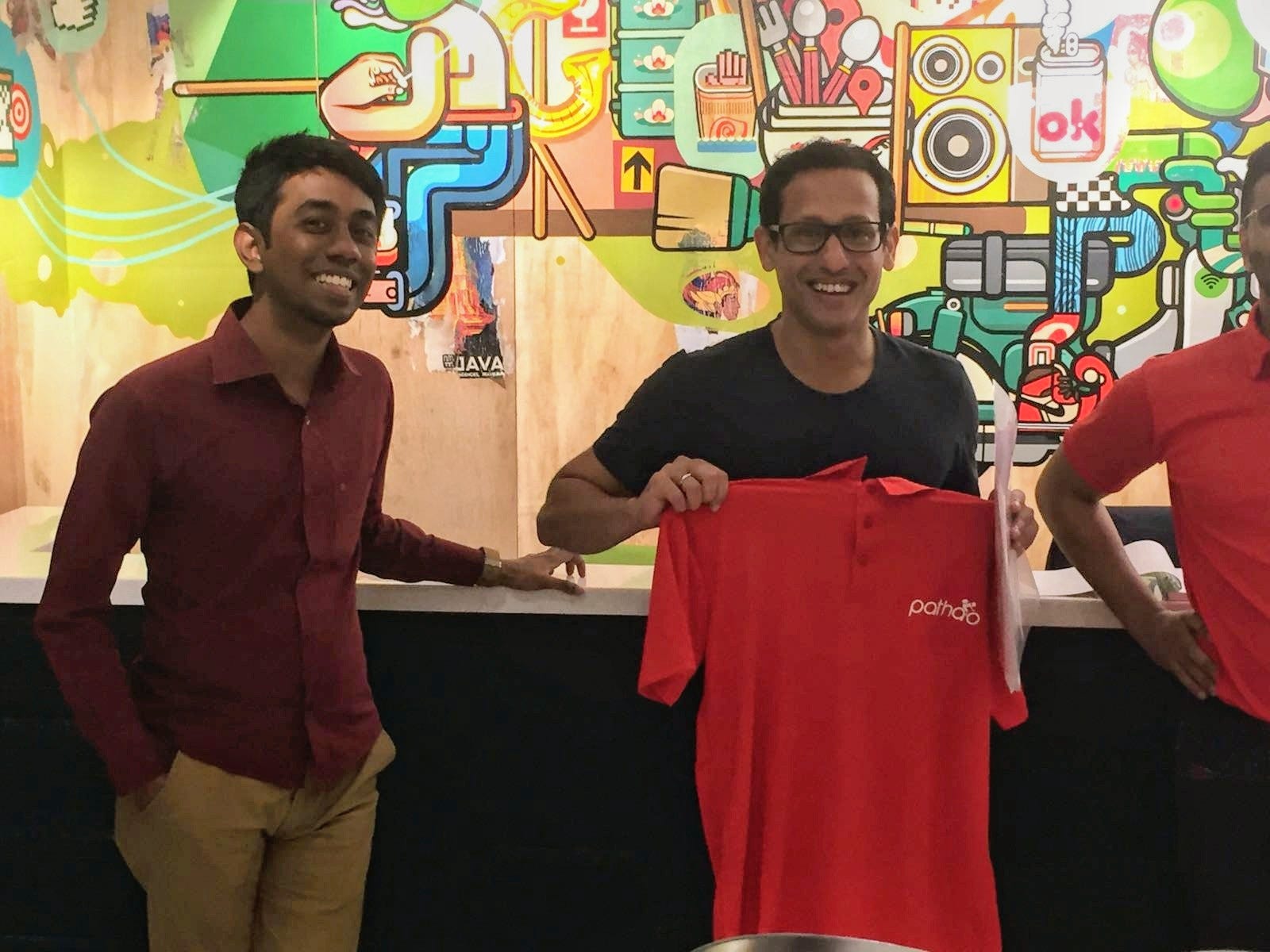
The first time I met Nadiem Makarim, he came down to a food court.
Gojek’s headquarters occupied the top two floors of a Jakarta shopping mall. He didn’t book a conference room. We sat at a plastic table wedged between a fried chicken chain and a coffee kiosk, kids running past, the smell of nasi goreng in the air. I had thirty minutes.
He listened for eight, then started asking questions. Unit economics. Retention by cohort. Rider CAC, passenger CAC, the ratio between them and its direction. Not one question about vision. He had heard a thousand visions.
Years later I watched footage of that same man walking into a courthouse in a prosecutor’s vest. He was sentenced to ten years over the procurement of Chromebook laptops during his time as education minister, a case built partly on Google having been an early investor in Gojek’s parent company. Outside, hundreds of ojek drivers gathered to support the man who had given them an industry. (ABC News)
I have no interest in litigating his guilt. What interests me is the recalculation that followed.
Mature markets don’t do this. When one American founder is indicted, American venture capital does not pause. There are ten thousand other data points holding the thesis up. Our region has maybe a dozen, and two or three of them are faces. Indonesia had Nadiem. That is not a compliment to him. It is a diagnosis of us.
The Fraud Tax
The Gojek round took six months to close and nearly broke me. Question lists that ran for pages. Follow-ups on the answers, then follow-ups on those. We spent more on legal fees in six months than we had spent running the entire first year of the company. I remember sitting in the office at two in the morning convinced these people did not want to invest, they wanted to punish me.
I understand now that I was getting diligence at a discount.
In late 2024, an Indonesian aquaculture startup called eFishery was reported for financial manipulation. Across nine months it told investors it had done roughly $752 million in revenue against a real figure of about $157 million, and reported a $16 million profit while losing $35.4 million. The founder was sentenced to nine years, later reduced to six. SoftBank, Temasek, Peak XV and 42XFund were all in. (Career Candour)
Malaysia’s state pension fund put close to $48 million into that round after internal assessment, independent third-party diligence, and audited financials verified by certified international auditors, alongside a consortium running their own reviews. By July 2026 the finance ministry was explaining that loss to parliament in writing, and the country’s anti-corruption commission had opened an investigation into the loss itself. (South China Morning)
Read that again. A pension fund did everything the textbook says and now defends itself to a legislature.
That is what a fraud does to a region. It does not burn capital. It makes allocating to your part of the world a career risk for the person signing the cheque. Wirecard did this to German fintech. FTX did it to crypto for a full cycle. The honest operators pay a tax levied by someone they never met.
The Bill Arrives Elsewhere
And it arrives somewhere the people who caused it will never look.
In March 2026, several hundred employees at a Jashore facility staged demonstrations demanding three to four months of unpaid wages. The company was Chaldal, which pioneered online grocery in Bangladesh, sitting on a working capital shortfall of Tk40 crore, having quietly cut its workforce from 3,300 to 2,200, and writing to a state fund asking for emergency bridge financing. This is a company that raised around $40 million over a decade and hit $55 million in annual revenue during the pandemic. (Future Startup)
It wasn’t the first. In 2022, Sheba, the country’s largest home services marketplace, missed a foreign round and had to lay off most of its staff to survive. It only came back because local conglomerates stepped in where foreign capital had walked away. (The Daily Star)
Nothing was wrong with either product. People still want groceries delivered. People still need an electrician. The demand did not evaporate. The customers did not leave. What left was the money, and it left for reasons that had nothing to do with either company and everything to do with events three thousand kilometres away.
The numbers underneath tell you exactly what happened. Bangladeshi startups raised over $434 million across 94 deals in 2021. By 2024 that was $42 million across 41 deals. In 2025, headline funding rose to $124 million, but $110 million of it was a single transaction, and the deal count fell to twelve. (The Hans India, The Business Standard)
Ninety-four deals to twelve. That is not a market correcting the price of risk. That is a market that has stopped functioning as a market.
And this is what I mean when I say the region isn’t mature. In a mature ecosystem, a good business with real revenue and real demand does not die because a stranger committed fraud in another country. There are enough sources of capital, enough acquirers, enough debt providers, enough public market depth that the failure of one node does not sever the whole network. Here there is essentially one artery, foreign growth capital, and when it constricts, companies that did everything right start missing payroll.
Fashion, Not Analysis
In 2016 an investor near Raffles Place asked me about the opportunity, nodded politely for twelve minutes, and told me his fund had no mandate for my market.
A mandate is not analysis. It is permission. Nobody can tell a board they allocated because it felt right. They need a category, a precedent, a comparable.
Eighteen months later, after Gojek’s cheque, the same class of investor was calling me. Our unit economics had improved, but not that much. What changed was that someone respectable had gone first.
Now watch it run backwards. Not long ago it was a problem for a regional fund to lack Indonesia exposure. Today that exposure gets explained apologetically in LP letters. In the first half of 2025, Singapore absorbed something like 92 percent of Southeast Asia’s total startup funding. Capital did not leave the region. It fled to the jurisdiction with the clearest rules and hid there. (Visible.vc)
This happened to China in 2021. It happened to India in 2015 and reversed. Mandates lag returns. They are a record of what already worked, formalised. Which gives you two rules. Raise when your geography is fashionable, whether or not you need the money. And understand that when it is toxic, the competition for talent, category and customers is the thinnest it will ever be.
What You Actually Control
In 2019, with sixty days of cash, we cut two hundred people. Half the company. Not underperformers. People still hitting their numbers. We had to execute inside a week, because rolling into the next month meant an extra month of severance we could not fund.
Then we killed every product line that could not pay for itself, froze hiring, cut marketing to nothing. Within three months, core operations were cash-flow positive.
Three months. We could have done that in 2017 and nobody would have died. We didn’t, because capital was cheap and growth was the product we were really selling.
Amazon sold convertible debt into a closing window in 2001 and spent two years defending gross margin. Airbnb took openly humiliating terms in 2020 and stayed alive long enough to make the humiliation irrelevant. None of that is heroism. It’s sequencing.
Four levers, in order. Run every product as its own P&L and be honest about which ones are subsidised. Kill anything without a credible path to positive contribution margin this quarter, not next. Test the price increase you are frightened of, because the churn is usually half what you fear and the margin is immediate. And build a ninety-day cash plan that assumes your next round never arrives, severance arithmetic included, so that if the day comes you are executing a plan instead of discovering one.
I don’t think this region is finished. I think it has run out of the thing it was quietly running on, which was the assumption that the next cheque was coming.
The version of this story where a new fund arrives with a fresh thesis and dry powder is the one everybody wants. I have stopped believing in it. Money follows proof, arrives late, and behaves as though it was early.
The other version is that enough of us build companies durable enough that no single scandal, no single face, no single conviction can reprice an entire region. That is what maturity actually is, and it is measured in artery count, not headline funding. We have one artery. Until we have four, a grocery company in Jashore will keep paying for a fish farm in Bandung.